
Erectile Dysfunction vs. Infertility: What’s the Difference? Complete Guide
Any American men’s health clinic will use two terms frequently. Erectile dysfunction, infertility. Most men believe these are related. That assumption is completely false.
This is it. Having trouble getting or keeping an erection is a separate medical issue from not being able to fertilize an egg. Both disorders impair sex life and mental health. But the causes differ. Tests differ. And the therapies differ greatly.
The American Urological Association estimates 30 million men have erectile dysfunction. The CDC reports that 9% of American men have had reproductive issues. These numbers are huge, and uncertainty between these illnesses sends many men to the wrong treatment.
What Is Erectile Dysfunction?
The Basics
Erectile dysfunction means a man cannot get an erection firm enough for sex, or he loses it before finishing. Simple as that.
Now here is something important. Every guy has an off night once in a while. Too much whisky, work stress, and lack of sleep. That is normal and nothing to worry about. But when this becomes a regular thing happening more often than not, that is when doctors start calling it ED.
How Common Is ED in America?
| Age Group | Percentage Affected |
|---|---|
| 40-49 years | Around 40% |
| 50-59 years | Around 50% |
| 60-69 years | Around 60% |
| 70+ years | Around 70% |
Source: Massachusetts Male Ageing Study
What Causes ED?
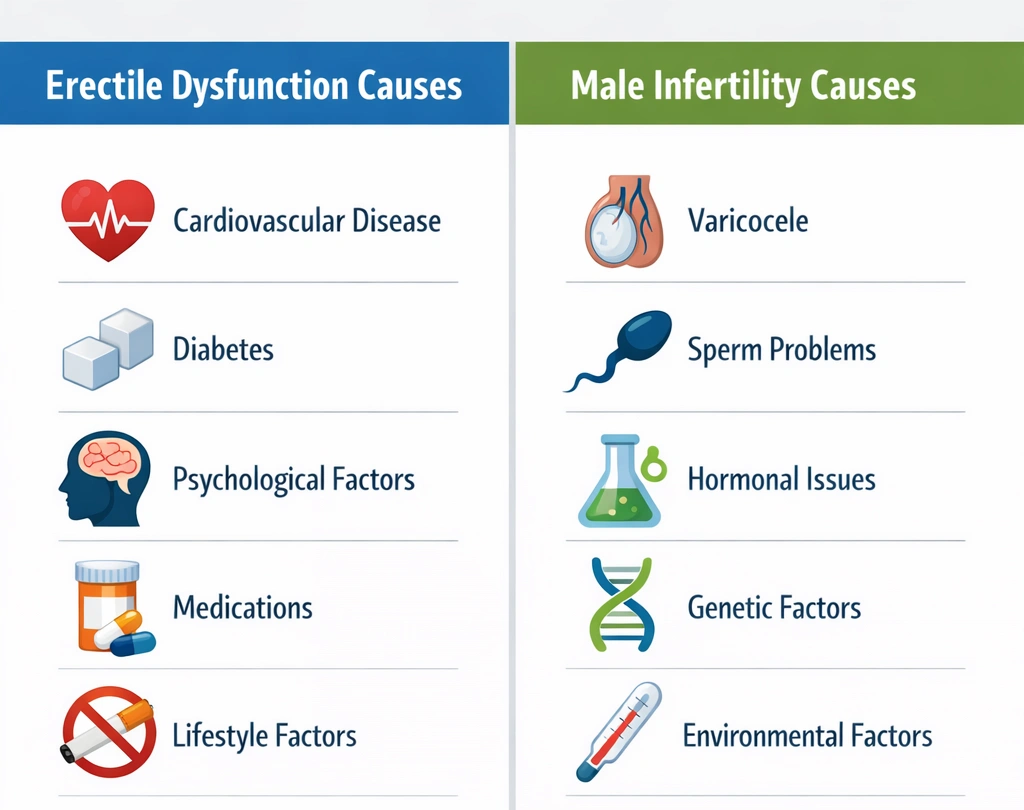
Physical Causes
- Cardiovascular disease and heart problems
- Type 1 and Type 2 diabetes
- High blood pressure
- High cholesterol levels
- Obesity and metabolic syndrome
- Parkinson’s disease
- Multiple sclerosis
- Peyronie’s disease
- Prostate surgery or radiation
- Low testosterone
Psychological Causes
- Stress from work or finances
- Depression and anxiety
- Relationship issues
- Performance anxiety
- Past trauma
Lifestyle Factors
- Smoking and tobacco use
- Drinking too much alcohol
- Recreational drug use
- Not exercising enough
- Poor sleep habits
What Is Male Infertility?
The Basics
Male infertility means a man cannot get a woman pregnant despite having regular unprotected sex for at least a year. That is the clinical definition most doctors use.
The key thing to understand here is that infertility has nothing to do with erections. A guy with infertility might have rock-solid erections every single time. His body just produces sperm that cannot do the job of fertilizing an egg.
Infertility Statistics in the United States
- 1 in 8 couples struggle with infertility issues.
- Male factors contribute to 40-50% of all infertility cases.
- About 2% of American men have suboptimal sperm parameters.
What Causes Male Infertility?
Sperm Production Issues
- Low sperm count (oligospermia)
- Zero sperm production (azoospermia)
- Abnormal sperm shape
- Poor sperm movement
Medical Conditions
- Varicocele (enlarged veins in testicles)
- Reproductive tract infections
- Hormonal imbalances
- Genetic conditions like Klinefelter syndrome
- Undescended testicles
- Celiac disease
Environmental and Lifestyle Factors
- Exposure to industrial chemicals and toxins
- Radiation exposure
- Excessive heat to testicles
- Anabolic steroid use
- Chemotherapy treatments
Key Differences: Erectile Dysfunction vs. Infertility
Side-by-Side Comparison
| Aspect | Erectile Dysfunction | Infertility |
|---|---|---|
| Primary Issue | Getting or keeping an erection | Ability to conceive a child |
| What It Affects | Sexual performance | Reproductive capability |
| Sperm Production | Usually normal | Often affected |
| Can Have Children | Yes, with proper function | Difficulty or inability |
| Sexual Desire | May be reduced | Usually normal |
| Ejaculation | Sometimes affected | Usually normal |
| How It Is Diagnosed | Physical exam, blood tests | Semen analysis, hormone tests |
| Age Factor | More common with age | Can happen at any age |
| Reversibility | Often treatable | Depends on the cause |
The Bottom Line
Here is what you need to remember:
A man with erectile dysfunction can still be fertile. His sperm works fine. He just has trouble with erections. With ED treatment or assisted reproduction, he can absolutely father children.
A man with infertility can have perfect erections. Everything works in the bedroom. But his sperm cannot do the job. That is a completely separate issue requiring different treatment.
Can Erectile Dysfunction Cause Infertility?
This question comes up constantly. Let me give you the straight answer.
Direct vs. Indirect Connection
ED does not directly cause infertility. Having trouble with erections does not affect your sperm count or quality. Your testicles keep doing their job regardless of what is happening with your erections.
However, ED can indirectly impair fertility:
- Cannot finish intercourse no erection indicates no spontaneous conception
- Low sex frequency ED might cause avoidance of intimacy.
- The same health factors might lead to both ED and reproductive concerns.
- Mental toll: ED stress can impact general health.
Risk Factors That Affect Both Conditions
- Diabetes
- Hormonal issues
- Obesity
- Smoking
- Some drugs
- Constant stress
- Getting older
Symptom Comparison
Erectile Dysfunction Symptoms
- Trouble getting an erection
- Difficulty maintaining erection during sex
- Reduced interest in sex
- Anxiety before sexual encounters
- Sometimes issues with ejaculation
Male Infertility Symptoms
The tricky part about infertility is that most men have zero symptoms. You feel completely normal. But watch for these signs:
- Cannot conceive after 12 months of trying
- Problems with sexual function or ejaculation
- Pain or swelling in the testicle area
- Less facial or body hair than normal
- Unusual breast tissue growth
- Diagnosed with low sperm count
How Doctors Diagnose These Conditions
Erectile Dysfunction Diagnosis
| Test | What It Checks |
|---|---|
| Physical Exam | Genital health and nerve responses |
| Blood Tests | Testosterone, blood sugar, cholesterol |
| Urine Tests | Diabetes and other conditions |
| Ultrasound | Blood flow to the penis |
| Psychological Evaluation | Mental health factors |
| Nocturnal Erection Test | Erections during sleep |
Male Infertility Diagnosis
| Test | What It Checks |
|---|---|
| Semen Analysis | Sperm count, movement, shape |
| Hormone Testing | Testosterone, FSH, LH levels |
| Genetic Testing | Inherited conditions |
| Testicular Biopsy | Sperm production in testicles |
| Transrectal Ultrasound | Prostate and seminal vesicles |
| Post-Ejaculation Urinalysis | Retrograde ejaculation |
Treatment Options
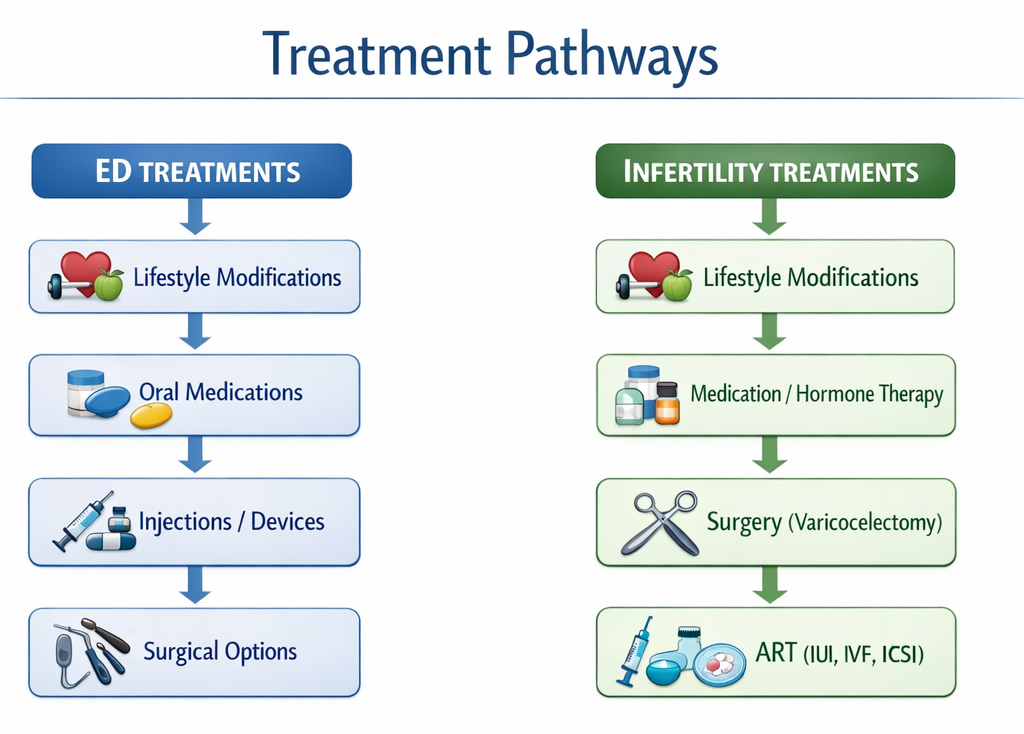
Erectile Dysfunction Treatments
Oral Medications
Other Medical Treatments
- Testosterone replacement therapy
- Penile injections with alprostadil
- Urethral suppositories
- Vacuum erection devices
- Penile implants through surgery
Lifestyle Changes
- Regular physical exercise
- Losing excess weight
- Quitting smoking
- Cutting back on alcohol
- Managing stress better
- Improving sleep quality
Psychological Treatments
- Sex therapy
- Couples counselling
- Cognitive behavioral therapy
- Stress management programs
Male Infertility Treatments
Medical Treatments
- Hormone replacement therapy
- Antibiotics for infections
- Medications for ejaculation problems
Surgical Treatments
- Varicocelectomy to repair varicocele
- Vasectomy reversal
- Sperm retrieval procedures like TESE, MESA, and PESA
Assisted Reproductive Technologies
- Intrauterine Insemination (IUI) – Sperm placed directly in uterus
- In Vitro Fertilization (IVF) Eggs fertilized outside the body
- Intracytoplasmic Sperm Injection (ICSI) Single sperm injected into egg
Lifestyle Changes
- Avoiding hot tubs and saunas
- Maintaining healthy body weight
- Reducing exposure to toxins
- Eating foods rich in antioxidants
- Taking supplements like zinc, folic acid, and CoQ10
Advantages and Disadvantages of Treatment Options
Erectile Dysfunction Treatments
Advantages
| Treatment Type | Advantages |
|---|---|
| Oral Medications | Quick results (30-60 minutes), high success rate (60-70%), non-invasive, widely available |
| Penile Injections | Works when pills fail, fast acting (5-20 minutes), high efficacy |
| Vacuum Devices | No medication needed, can be used with other treatments, cost-effective |
| Penile Implants | Permanent solution, highest satisfaction rates (90%+), natural feeling |
| Lifestyle Changes | Address root causes, improve overall health, no side effects |
Disadvantages
| Treatment Type | Disadvantages |
|---|---|
| Oral Medications | Side effects (headaches, flushing), can’t use with certain medications, expensive without insurance |
| Penile Injections | Pain at injection site, risk of prolonged erection, requires self-injection |
| Vacuum Devices | Can feel unnatural, may cause bruising, interrupts spontaneity |
| Penile Implants | Surgical risks, irreversible, expensive ($15,000-$25,000) |
| Lifestyle Changes | Takes time to see results, requires commitment and discipline |
Male Infertility Treatments
Advantages
| Treatment Type | Advantages |
|---|---|
| Hormone Therapy | Non-invasive, can restore natural fertility, addresses underlying issues |
| Surgery (Varicocelectomy) | High success rate (40-50% pregnancy), one-time procedure, permanent fix |
| IUI | Less invasive than IVF, lower cost ($500-$2,000), natural conception |
| IVF/ICSI | High success rates, works with very low sperm counts, genetic testing possible |
| Lifestyle Changes | Natural approach, improves overall health, no medical risks |
Disadvantages
| Treatment Type | Disadvantages |
|---|---|
| Hormone Therapy | May take months to work, side effects possible, regular monitoring needed |
| Surgery | Surgical risks, recovery time needed, not guaranteed to restore fertility |
| IUI | Lower success rate than IVF (10-20%), may need multiple cycles |
| IVF/ICSI | Very expensive ($12,000-$15,000 per cycle), emotionally demanding, not covered by all insurance |
| Lifestyle Changes | Slow results, may not be sufficient alone |
When You Should See a Doctor
See a urologist for ED. If
- You consistently have trouble getting or keeping an erection.
- The problem is causing stress or relationship issues.
- You have other sexual concerns like premature ejaculation.
- You have diabetes, heart disease, or other chronic conditions.
- ED started after beginning a new medication
See a fertility specialist. If
- You have been trying to conceive for 12 plus months without success.
- You have known risk factors for male infertility.
- Your partner has been tested, and no female factors were found.
- You have a history of testicular problems.
- You have had cancer treatment or radiation exposure.
Prevention Tips for Both Conditions
What You Can Do Starting Today
| Action | How It Helps ED | How It Helps Fertility |
|---|---|---|
| Regular Exercise | Improves blood flow | Boosts testosterone |
| Healthy Diet | Supports heart health | Enhances sperm quality |
| Quit Smoking | Prevents artery damage | Improves sperm count |
| Limit Alcohol | Protects nerve function | Maintains hormone balance |
| Manage Stress | Reduces psychological ED | Improves reproductive health |
| Maintain Healthy Weight | Balances hormones | Increases fertility |
| Get Quality Sleep | Supports testosterone | Enhances sperm production |
| Avoid Toxin Exposure | Protects blood vessels | Protects sperm DNA |
Frequently Asked Questions
Can a man with erectile dysfunction still father a child?
Yes, because ED only affects erections while sperm production stays completely normal, so assisted reproduction or treating the ED makes fatherhood absolutely possible.
Does Viagra help with male infertility?
No, Viagra only helps with erections and does nothing for sperm count, quality, or production whatsoever.
What is the most common cause of male infertility in America?
Varicocele causes roughly 40 percent of diagnosed male infertility cases, and the good news is surgery usually fixes it.
Can stress cause both erectile dysfunction and infertility?
Yes, chronic stress raises cortisol which tanks your testosterone, messes with erections, and can reduce sperm quality over time.
At what age should men worry about these conditions?
ED risk climbs after 40 but can happen younger, while fertility drops gradually after 40 and more sharply after 50.
Are these treatments covered by health insurance in the USA?
Coverage varies wildly by state and plan, with most insurers skipping ED meds and only 21 states requiring any fertility coverage.
Can natural supplements help with ED or infertility?
Some supplements like zinc and L-arginine show promise, but evidence remains mixed and you should always check with your doctor first.
Conclusion
Look, these two conditions get mixed up all the time but they are completely different animals requiring different doctors and different treatments. The guy who cannot get it up might have perfectly healthy sperm, and the guy with a low sperm count might perform just fine in bed. Stop guessing, see the right specialist, and get your life back on track because both conditions are very treatable in 2024.