
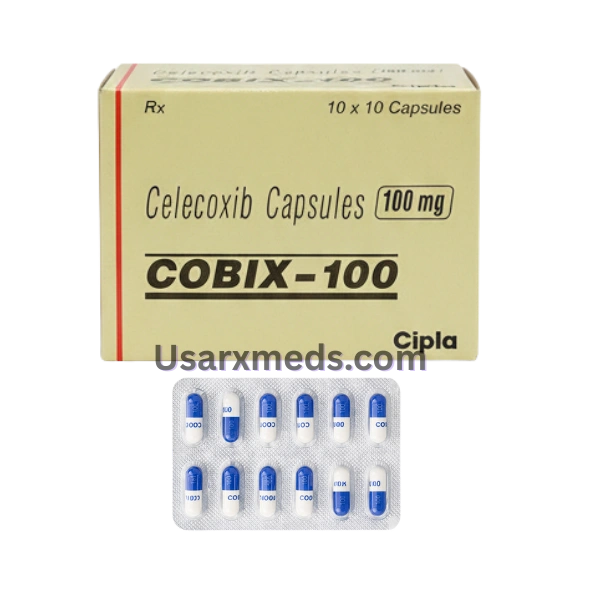
Description
What is Celecoxib 100 mg?
Celecoxib 100 mg is an oral medication in the NSAID family (nonsteroidal anti-inflammatory drugs). It’s often referred to as a COX-2 selective NSAID, meaning it primarily targets an enzyme involved in pain and inflammation.
In the United States, celecoxib is commonly prescribed to help manage pain and stiffness from inflammatory conditions. If you’re exploring additional pain-care options, you can also browse the pain relief category here: pain
How it works (simple)
Celecoxib reduces pain and inflammation by blocking cyclooxygenase-2 (COX-2), an enzyme the body uses to make prostaglandins (chemical messengers involved in swelling, pain, and inflammation).
While COX-2 selectivity may reduce certain stomach side effects compared with some non-selective NSAIDs, serious GI bleeding can still occur especially at higher doses or with longer use.
Uses / What it’s commonly prescribed for
Healthcare providers may prescribe celecoxib for:
- Osteoarthritis pain and stiffness
- Rheumatoid arthritis symptoms
- Ankylosing spondylitis pain and inflammation
- Acute pain (short-term use in select cases)
- Primary dysmenorrhea (menstrual cramps)
Your clinician will decide if a celecoxib 100 mg capsule is appropriate based on your history (especially heart, stomach, kidney, or bleeding risks).
How to take / use directions (general)
Follow your licensed healthcare provider’s directions and the prescription label. General guidance often includes:
- Take by mouth with water, usually once or twice daily depending on the condition.
- You may take it with or without food take it with food if it upsets your stomach.
- Swallow capsules whole unless your pharmacist/provider gives specific alternate instructions.
- Use the lowest effective dose for the shortest duration appropriate for your condition (common NSAID safety principle).
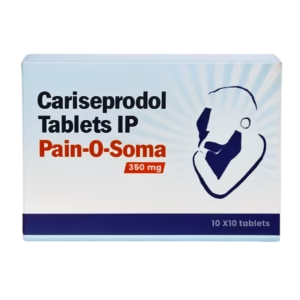
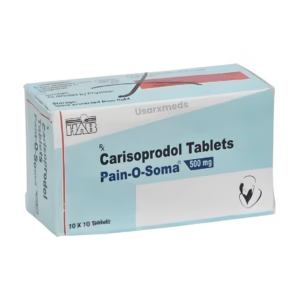
If you’re managing muscle pain or spasms and looking for related options, some patients also review products like Pain O Soma (carisoprodol) with a clinician’s guidance:
Side effects (common vs. serious)
Common side effects (often mild, not everyone gets them):
- Stomach upset, indigestion, diarrhea, gas
- Headache or dizziness
- Swelling in hands/feet (fluid retention)
- Upper respiratory symptoms (e.g., congestion)
Serious side effects seek urgent care right away if you notice:
- Chest pain, shortness of breath, weakness on one side, slurred speech (possible heart attack or stroke)
- Black/tarry stools, vomiting blood, severe stomach pain (possible GI bleeding/ulcer)
- Severe rash, blistering/peeling skin, facial swelling, wheezing (possible severe allergy/skin reaction)
- Little/no urine, sudden weight gain, significant swelling (possible kidney problem)
- Yellowing of skin/eyes, dark urine (possible liver problem)
Warnings & precautions
Celecoxib carries important NSAID warnings. Tell your healthcare provider if you have or have had:
- Heart disease, prior stroke, high blood pressure, high cholesterol, diabetes, or smoking history
- Stomach ulcers, GI bleeding, inflammatory bowel disease
- Kidney disease or dehydration liver disease
- Asthma (especially aspirin/NSAID-sensitive asthma)
- Fluid retention or heart failure
Pregnancy: NSAIDs (including celecoxib) are generally avoided from ~20 weeks of pregnancy onward unless specifically advised, due to fetal kidney risks avoid in the third trimester.
Breastfeeding: Celecoxib can pass into breast milk in small amounts discuss risks/benefits with a licensed provider.
Interactions (meds/food/alcohol)
Celecoxib may interact with other medicines. Tell your provider and pharmacist about everything you take, including OTC products and supplements.
Notable interactions include:
- Blood thinners/anticoagulants (e.g., warfarin) and antiplatelets (bleeding risk)
- Other NSAIDs (e.g., ibuprofen/naproxen) or high-dose aspirin (more GI risk)
- SSRIs/SNRIs (may increase bleeding risk)
- ACE inhibitors/ARBs and diuretics (may worsen kidney function in some people)
- Lithium or methotrexate (levels/effects may increase)
- CYP2C9 inhibitors (e.g., fluconazole) may raise celecoxib levels inducers (e.g., rifampin) may lower effect.
Alcohol: Can increase the risk of stomach irritation/bleeding use caution and ask your provider.
Advantages & Disadvantages
Advantages
- Helps reduce pain and inflammation for common arthritis conditions
- COX-2 selective mechanism (may reduce some stomach irritation for some patients vs. non-selective NSAIDs)
- Capsule form is convenient for many adults
- Can be used as part of a broader pain-management plan under medical guidance
- Widely recognized active ingredient with established prescribing guidance in the U.S.
Disadvantages
- Can raise risk of heart attack or stroke, especially at higher doses/long-term use
- Can cause serious GI bleeding/ulcers (sometimes without warning)
- May affect kidney function and fluid balance in susceptible patients
- Not suitable for everyone (allergies, certain heart/surgery contexts)
Who should not use it? (contraindications)
Celecoxib is not appropriate for everyone. It is typically avoided in people with:
- Allergy to celecoxib or sulfonamides
- History of asthma/urticaria/allergic-type reactions after taking aspirin or other NSAIDs
- Use for peri-operative pain in coronary artery bypass graft (CABG) surgery
- Any situation where your licensed provider advises against NSAIDs due to high risk (individual assessment)
Storage & handling (US-friendly wording)
- Store at room temperature (68°F–77°F) protect from moisture and excess heat.
- Keep the bottle tightly closed and away from humidity (avoid storing in a steamy bathroom).
- Keep out of reach of children and pets.
- Dispose of unused medication according to local guidance/pharmacy take-back options.
FAQs
1) Is celecoxib 100 mg safe for adults?
It can be safe and helpful when prescribed properly, but it has dangers (heart, GI bleeding, kidneys). Your doctor will assess the pros and cons.
2) How quickly does 100 mg celecoxib work?
Many feel relief within 1–3 hours, but condition, dose regimen, and reaction vary.
3) What if I miss a dose?
Follow your doctor’s instructions. Generally, take your medication whenever you remember, unless the next dose is imminent. Don’t double up unless your doctor specifically directs you to.
4) Is it okay to take celecoxib with food?
Yes, you can take it any way. If you find it upsets your stomach, try taking it with something to eat.
5) What gives me the confidence to order from usarxmeds.com within the United States?
Check over the product pages and support materials on the website, and be sure to double-check your order before finalizing it. If anything’s unclear, don’t hesitate to contact customer support. You may also explore the pain category for more choices: pain
6) How should I store celecoxib capsules at home?
At room temperature, store tightly closed and dry, away from heat and moisture, and out of reach of children.



Reviews
There are no reviews yet.