
Description
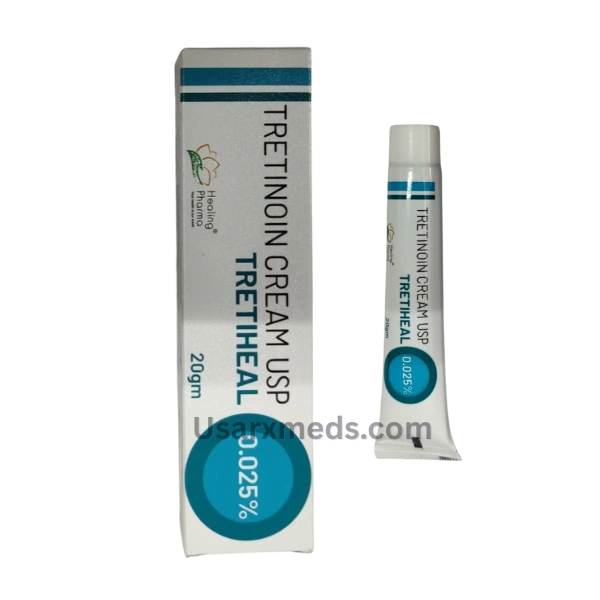
What Tretiheal 0.025% cream Is
Tretiheal contains tretinoin, the active form of vitamin A that’s been prescription-only in the US since 1971. Unlike over-the-counter retinol from Sephora or Ulta—which needs to convert on your skin before working—tretinoin is already active. Your cells recognize it immediately.
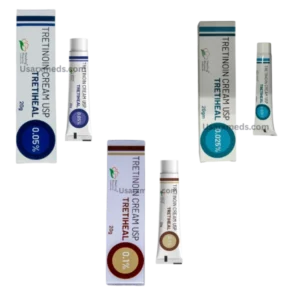
The 0.025% concentration is the entry-level prescription strength. Walgreens, Walmart, and CVS typically stock the generic “Tretinoin 0.025% Cream,” though your insurance might cover the Tretiheal brand name depending on your pharmacy. There’s also a gel version (better for oily skin) and higher strengths (0.05% and 0.1%), but the 0.025% cream is where every smart dermatologist starts you—especially if you’re prone to dryness or have never used a retinoid before.
| Feature | Details |
|---|---|
| What it does | Unclogs pores and boosts collagen production |
| Strength | 0.025% (perfect for beginners/sensitive skin) |
| Best time to apply | Night only (never during daylight hours) |
| Results timeline | 8–12 weeks of consistent use |
Benefits
- Clears acne without antibiotics
Unlike benzoyl peroxide that just kills surface bacteria, tretinoin dives deep into pores and stops clogs before they start. It pushes out existing blackheads and prevents the micro-comedones that turn into angry red pimples. You’ll still get the occasional breakout, but they’ll be smaller and heal faster. - Fades sun damage and dark marks
That melasma from your beach vacation or the post-acne marks that linger for months? Tretinoin speeds up cell turnover so your skin sheds those pigmented cells faster. It won’t bleach your skin like hydroquinone, but it evens out tone naturally over time. - Anti-aging that actually works
This is the only topical ingredient with decades of clinical proof for collagen production. It thickens the deeper layers of skin where wrinkles form, softening crow’s feet and forehead lines better than department store serums. At 0.025%, you get the benefits without the burn of higher strengths. - Prevents future damage
By keeping pores clear and skin renewing itself constantly, you’re preventing both future breakouts and the textural issues that make skin look old before its time.
Disadvantages
- The “purge” is real and ugly
For the first 4–6 weeks, your face might look worse. All the deep clogs that were hiding under your skin get pushed to the surface simultaneously. You’ll see new whiteheads, redness, and texture in places that were previously clear. This means it’s working, but it’s emotionally brutal when you’re trying to look good for work or dates. - Sun sensitivity that demands respect
Your skin becomes photosensitive meaning you can burn in 15 minutes of grocery store parking lot time. If you can’t commit to daily SPF 30+ and a hat, you’ll damage your skin faster than this cream fixes it. Some people develop dark patches instead of clearing them if they skip sunscreen. - Dryness and peeling
The cream base helps, but you’ll still get flakes around your nose and mouth. Your face might feel tight after washing. You’ll need to spend extra on heavy moisturizers like CeraVe or Vanicream to combat the dryness. - Pregnancy risk
Vitamin A derivatives cause birth defects. If you’re pregnant, breastfeeding, or trying to conceive, you cannot use this. Period. Not worth the risk. - Takes patience
This isn’t a spot treatment you slap on Friday night before a Saturday wedding. You need 3 months of consistent use to see real results, and you must keep using it indefinitely to maintain them.
How to Store Your Cream
Keep the tube tightly closed at room temperature between 68°F–77°F. Don’t store it in your steamy bathroom medicine cabinet where shower humidity degrades the active ingredient, and never leave it in a hot car (summer glove boxes can hit 140°F). If the cream turns yellow or develops a sharp chemical smell, the tretinoin has oxidized—throw it out and get a fresh tube from your pharmacy.
Best Ways to Use It
- The “Sandwich” Method for Beginners
Apply a thin layer of moisturizer first, wait 5 minutes for it to absorb, then apply your pea-sized amount of Tretiheal, wait another 5 minutes, then moisturize again. This buffering technique cuts irritation by 70% without killing the effectiveness. - Frequency Build-Up
Start with 2–3 nights per week (Monday, Thursday, Saturday). If your skin isn’t screaming after two weeks, move to every other night. Eventually work up to nightly use, but only if you can handle it without peeling. - Application Rules
Wash your face with a gentle cleanser (Cetaphil or similar), wait a full 20 minutes until your skin is bone-dry, then apply the cream. Putting tretinoin on damp skin causes immediate irritation and chemical burns. Avoid the corners of your nose, the skin directly under your eyes, and your lips for the first month. - Morning After
Wash gently, apply a vitamin C serum if you use one, then layer on SPF 30 or higher. Reapply sunscreen every 2 hours if you’re outside. Seriously.
FAQ
Is Tretiheal the same as Retin-A?
Yes. Same active ingredient (tretinoin), same concentration. Tretiheal is often the international brand name or specific manufacturer, while Retin-A is the original US brand. The generic “Tretinoin 0.025% Cream” from your local pharmacy works identically.
Can I use moisturizer with it?
Absolutely. In fact, you should. The sandwich method (moisturizer before and after) reduces dryness and peeling significantly. It might slow absorption by 10%, but the trade-off for comfortable skin is worth it.
Why is my face peeling like crazy?
You’re either using too much product (remember: pea-sized for the whole face), applying it too often, or putting it on damp skin. Cut back to every third night, ensure your face is completely dry before application, and switch to a heavier moisturizer.
Can I use it under my eyes?
Not at first. The skin there is paper-thin and will burn easily. Wait until you’ve successfully used it on your cheeks and forehead for 3 months without irritation, then carefully apply a tiny amount to crow’s feet areas only.
Do I really need sunscreen if I work indoors?
Yes. UVA rays penetrate windows, and tretinoin makes your skin hypersensitive to all light. You can develop dark patches or burns even sitting near a sunny window. SPF 30 minimum, every single day, reapply if you go outside for lunch.
Can I wax my eyebrows or upper lip while using this?
No! Waxing will rip off the top layer of skin along with the hair, leaving you with raw, scabbed patches. Switch to threading or tweezing for hair removal while on tretinoin.
How long does one tube last?
Three to four months if you’re actually using a pea-sized amount. Most people use way too much initially, finishing tubes in 6 weeks. Less is more with this medication.
Can I use salicylic acid or benzoyl peroxide with it?
Not when you’re starting out. That combination causes chemical burns and peeling. Wait until you’ve used tretinoin alone for 3 months, then slowly introduce acids or benzoyl peroxide in the morning (tretinoin at night) if needed.









Reviews
There are no reviews yet.