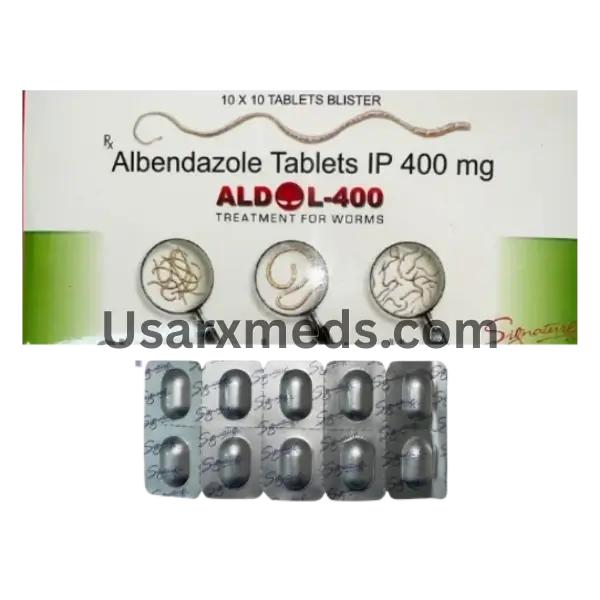
Albendazole 400 mg

Albendazole 400 mg

Price range: $45.00 through $150.00

Albendazole 400 MG is a broad-spectrum antihelmintic medication used to treat a wide variety of parasitic worm infections in the body. It is one of the most commonly prescribed deworming tablets worldwide and works against intestinal parasites like roundworms, hookworms, whipworms, tapeworms, and pinworms. The tablet works by stopping the worms from absorbing sugar, which essentially starves them to death. It is typically taken as a single dose for common intestinal worm infections, making it a quick and practical solution for something nobody wants to deal with longer than necessary.

Attribute Details
Active Ingredient Albendazole
Strength 400mg
Indication: Parasitic worm infections
Packaging 10 tablets in 1 strip
Manufacturer HAB Pharmaceuticals & Research Ltd

Albendazole 400 mg

Variant Price Units Quantity Add to Cart
50 Tablet/s $45.00 $0.9 /Tablet
100 tablet/s $80.00 $0.8 /Tablet
200 tablet/s $150.00 $0.75 /Tablet

Use Coupon: UX20 20% OFF
Share:f𝕏win
📋 Product Description
Albendazole 400 MG is the kind of medication that people usually do not want to talk about needing, but it quietly does some really important work. Parasitic worm infections affect more people than you would think, and they are not limited to any specific part of the world. Whether it is a kid who picked something up at school or an adult dealing with a stubborn intestinal issue, worm infections happen, and Albendazole is one of the go-to treatments. Let me break down what this medication actually does, who needs it, and what to expect when taking it.

What Is Albendazole 400 MG?

It is an oral anti-parasitic tablet belonging to a drug class called benzimidazoles. In simple terms, it is a deworming medication. The 400mg strength is the standard adult dose for most common intestinal worm infections, and it has been in use globally for decades. Albendazole works differently from some other anti-parasitic drugs. Instead of paralyzing the worms like Ivermectin does, it takes a different approach. It interferes with the worms' ability to absorb glucose. Since glucose is their primary energy source, cutting off that supply essentially starves the parasites. Without energy, they cannot survive, reproduce, or hold onto the intestinal wall. They die and get passed out of the body naturally. It is a pretty elegant solution when you think about it.

What Kinds of Worm Infections Does It Treat?

Albendazole covers a surprisingly wide range of parasitic worms. That is why doctors often call it a "broad-spectrum" antihelmintic. Here are the most common infections it is prescribed for: Roundworm (Ascariasis). One of the most common intestinal worm infections worldwide. These worms live in the intestines and can grow surprisingly long. Symptoms include stomach pain, nausea, and sometimes visible worms in stool. Hookworm. These parasites attach to the lining of your intestines and feed on blood. They can cause anemia, fatigue, and abdominal discomfort. You typically pick them up through contaminated soil. Whipworm (Trichuriasis). Another intestinal parasite that can cause diarrhea, stomach cramps, and rectal prolapse in severe cases. Albendazole handles this one effectively, though it sometimes requires a multi-day course rather than a single dose. Pinworm (Enterobiasis). Extremely common in children. The telltale sign is intense itching around the anal area, especially at night. A single dose of Albendazole usually does the trick, with a follow-up dose two weeks later. Tapeworm. These flat, segmented worms can grow very long inside your intestines. Albendazole is used for certain types of tapeworm infections, particularly pork tapeworm (Taenia solium). Neurocysticercosis. This is a more serious condition where tapeworm larvae form cysts in the brain. Treatment with Albendazole for this condition requires much longer courses and close medical supervision. It is not a self-treat situation at all. Hydatid Disease (Echinococcosis). Another serious parasitic condition where cysts form in organs, usually the liver or lungs. Albendazole is used as part of the treatment plan, often alongside surgical intervention. For basic intestinal worm infections, treatment is usually quick and straightforward. For the more complex conditions like neurocysticercosis or hydatid disease, you are looking at weeks or even months of treatment under close medical monitoring.

How to Take Albendazole 400 MG

For common intestinal worms like roundworm, hookworm, or pinworm, the standard approach is a single 400mg tablet. That is it. One and done for most people. For whipworm, treatment might extend to three days of taking one tablet daily. And for more serious parasitic conditions, your doctor will lay out a specific plan that could involve taking Albendazole twice daily for weeks at a time. Unlike Ivermectin, Albendazole is generally better absorbed when taken with food, especially fatty food. So taking it with a meal is actually encouraged for most conditions, particularly the more serious ones where you want maximum absorption. For simple intestinal worms, it can be taken with or without food since you are just trying to knock out the parasites living in the gut. Chew the tablet or crush it if you have trouble swallowing. Some formulations are specifically made as chewable tablets for this reason.

Side Effects Worth Knowing About

For a single-dose treatment, side effects are minimal for most people. You might not feel anything different at all. But here are the ones that do come up:
  • Stomach pain or discomfort
  • Nausea
  • Vomiting
  • Headache
  • Dizziness
  • Temporary hair thinning (more common with longer courses)
  • Elevated liver enzymes
That last point is important if you are on a longer treatment course. Albendazole can affect liver function, so doctors typically order blood tests to monitor liver enzymes during extended use. If you are just taking a single dose for pinworms, this is not something you need to worry about. There is also a specific concern for people being treated for neurocysticercosis. When the cysts in the brain start dying off, it can cause increased inflammation and swelling, which may lead to headaches, seizures, or other neurological symptoms. This is why treatment for that condition is always done under direct medical care, usually with corticosteroids given alongside to manage the inflammatory response.

Who Should Not Take Albendazole?

Pregnant women. This is a big one. Albendazole has been shown to cause birth defects in animal studies, so it should not be taken during pregnancy. Women of childbearing age are often advised to take a pregnancy test before starting treatment and to use effective birth control during and for at least one month after treatment. People with liver disease. Since the drug is processed by the liver, existing liver problems can complicate things. Your doctor may need to run tests before and during treatment. Anyone allergic to benzimidazole compounds. If you have had a reaction to Albendazole, Mebendazole, or similar drugs before, let your doctor know. People with retinal lesions from neurocysticercosis. Treating cysts near the eye can cause irreversible damage if the inflammatory response is not managed carefully.

How Is Albendazole Different From Mebendazole?

Both are benzimidazole drugs. Both treat intestinal worms. But Albendazole tends to be absorbed better into the bloodstream, which makes it more effective for tissue-dwelling parasites like those causing neurocysticercosis or hydatid disease. Mebendazole stays more localized in the gut, which makes it a fine choice for straightforward intestinal infections but less useful for parasites that have migrated to other parts of the body. For basic deworming, either one works. For anything more complex, Albendazole is usually the preferred option.

Available Strengths

Albendazole is available in different dosage forms:
  • Albendazole 200 MG Tablet
  • Albendazole 400 MG Tablet
  • Albendazole 400 MG Chewable Tablet
  • Albendazole Oral Suspension (200mg/5ml)
The 400mg tablet is the most commonly prescribed strength for adults and children over two years of age. The oral suspension is generally preferred for younger children who cannot swallow tablets easily. Other related anti-parasitic medications available on the market include: Your doctor will decide which medication and dose are right based on the specific parasite involved and your overall health.

Some Straight Talk

Deworming is not glamorous, but it is necessary when the situation calls for it. Albendazole 400 MG handles most common worm infections quickly and efficiently. For a lot of people, it is literally a one-tablet fix. The key is getting a proper diagnosis first. Different parasites require different approaches, and not every stomach issue is caused by worms. A stool test or other diagnostic workup from your doctor can confirm what you are dealing with so you are not just guessing. And if you have kids, regular deworming as recommended by your pediatrician is a solid preventive habit. Kids are magnets for this stuff, and catching it early keeps it from becoming a bigger problem down the road.

Frequently Asked Questions

1. How long does Albendazole 400 MG take to kill worms?

For common intestinal parasites, the worms start dying within a day or two of taking the tablet. You might notice dead worms in your stool over the following few days, which is normal and actually a sign that the medication is working. Complete clearance usually happens within one to three weeks depending on the type of worm.

2. Can children take Albendazole 400 MG?

Yes, children over two years old are typically given the same 400mg dose as adults for common intestinal worm infections. For children between one and two years, the dose is usually reduced to 200mg. Children under one year are generally not given Albendazole unless a doctor specifically recommends it. The chewable tablet or oral suspension form makes dosing easier for kids.

3. Do I need to take Albendazole again after the first dose?

For pinworm infections, a second dose is commonly recommended two weeks after the first to catch any newly hatched worms. For roundworm and hookworm, a single dose is often sufficient. If your symptoms persist after treatment, let your doctor know. They may recommend a repeat dose or additional testing to make sure the infection has fully cleared.

4. Can I take Albendazole as a preventive measure even if I do not have symptoms?

In some regions and guidelines, periodic preventive deworming is recommended, especially for children and people in areas where worm infections are common. Talk to your healthcare provider about whether preventive dosing makes sense for your situation. Taking it randomly without any medical guidance is not advisable.

5. What should I do if I experience side effects after taking Albendazole?

Mild side effects like stomach discomfort or a headache usually resolve on their own within a day. If you experience anything more concerning like persistent vomiting, severe abdominal pain, yellowing of the skin or eyes, or unusual fatigue, contact your doctor. These could indicate a liver-related issue, especially if you are on a longer treatment course. For single-dose treatments, serious side effects are quite uncommon.
size100 tablet/s, 200 tablet/s, 50 Tablet/s
Reviews

Reviews

There are no reviews yet.

Be the first to review “Albendazole 400 mg”

Your email address will not be published. Required fields are marked *

Related Products

Buy Ivercor Tablet(Ivermectin Tablet)

Buy Ivercor Tablet

Price range: $38.00 through $174.00
Ivercor 6 mg (Antiparasitic)

Ivercor 6 mg (Antiparasitic)

Price range: $38.00 through $174.00
Hydroxychloroquine 400 mg

Hydroxychloroquine 400 mg – Hetquenil 400mg

Price range: $85.00 through $294.00
Ivercor 12 mg (Antiparasitic)

Buy Ivercor 12 mg In USA (Antiparasitic)

Price range: $45.00 through $220.00