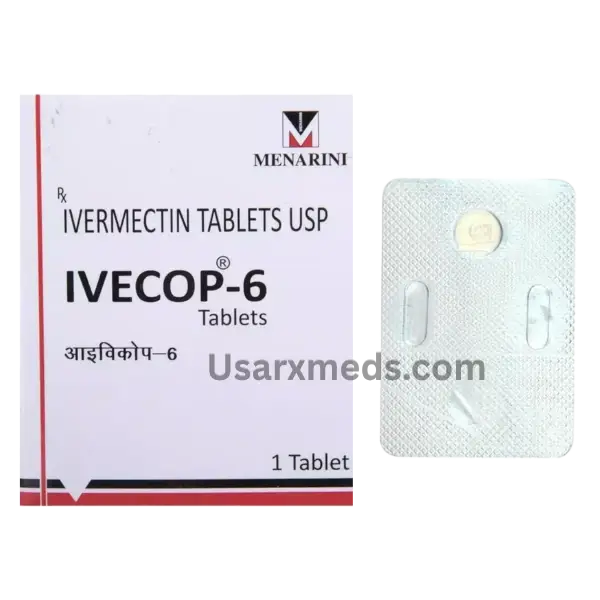
Ivecop 6 mg (Ivermectin Tablet)

Ivecop 6 mg (Ivermectin Tablet)

Price range: $40.00 through $95.00

Ivecop 6 MG is a mid-range Ivermectin tablet designed for treating parasitic infections effectively. Each tablet contains 6mg of Ivermectin, which sits right between the 3mg and 12mg options available in the same product line. This strength is particularly useful for weight-based dosing, allowing doctors to prescribe a more accurate total dose without asking patients to take too many individual tablets. It treats conditions like intestinal worms, scabies, onchocerciasis, and filariasis by paralyzing and killing parasites inside the body. A well-established antiparasitic medication backed by decades of clinical use worldwide.

Attribute Details
Active Ingredient Ivermectin
Strength 6mg
Indication: Scabies, Filariasis
Packaging 2 tablets in strip
Manufacturer Menarini India Pvt Ltd

Ivecop 6 mg (Ivermectin Tablet)

Variant Price Units Quantity Add to Cart
30 Tablet/s $40.00 $1.33 /Tablet
60 Tablet/s $67.00 $1.12 /Tablet
90 Tablet/s $95.00 $1.06 /Tablet

Use Coupon: UX20 20% OFF
Share:f𝕏win
📋 Product Description
Ivecop 6 MG fills a practical gap in Ivermectin dosing that a lot of people do not think about until they are actually trying to figure out how many tablets to take. The 3mg version sometimes means swallowing a whole handful of pills. The 12mg version can be too much for lighter individuals. The 6mg tablet sits comfortably in between, giving doctors and patients a cleaner way to hit the right dose without unnecessary hassle. If your doctor has put you on Ivermectin for a parasitic issue and handed you a prescription for 6mg tablets, here is what you should know about this medication.

Breaking Down What Ivecop 6 MG Actually Is

It is an oral tablet containing 6mg of Ivermectin, one of the most widely used antiparasitic drugs on the planet. Ivermectin was developed from a natural compound discovered in soil bacteria, and since its introduction in the 1980s, it has become a cornerstone of parasitic disease treatment worldwide. The scientists behind it won a Nobel Prize in 2015, which gives you a sense of how impactful this drug has been. At its core, Ivermectin is an antihelmintic and ectoparasiticide. That is a mouthful, but it basically means it kills both internal parasitic worms and external parasites like mites. The 6mg tablet is one of three strengths available under the Ivecop brand, and it works identically to the other strengths. The only variable is how many tablets you take to reach your prescribed dose.

The Conditions It Treats

Ivecop 6 MG is prescribed for the same parasitic infections as other Ivermectin products. Here is what falls under its range: Strongyloidiasis. This intestinal roundworm infection is sneaky. The worm Strongyloides stercoralis can live in your gut for years without causing dramatic symptoms. You might have vague stomach issues, occasional skin rashes, or intermittent diarrhea. But if your immune system takes a hit from something like long-term steroid use or an immune-suppressing condition, the infection can explode into a life-threatening situation called hyperinfection. Ivermectin is the first-choice treatment, and at the right dose, it clears the larvae effectively. Scabies. If you have ever had scabies, you know it is miserable. The constant itching, especially at night, can make you feel like you are losing your mind. The Sarcoptes scabiei mites dig into the top layer of your skin and lay eggs there. While topical permethrin cream is usually the first thing doctors try, oral Ivermectin becomes the go-to when creams are not enough. This is especially true for crusted scabies, which is a more severe form that can involve thousands of mites compared to the typical ten to fifteen in a regular case. Onchocerciasis. Known as river blindness, this disease is caused by the Onchocerca volvulus worm, transmitted through blackfly bites. The adult worms produce tiny larvae called microfilariae that spread throughout the skin and eyes. Ivermectin does not kill the adult worms, but it wipes out the larvae, which is what causes most of the symptoms. Treatment needs to be repeated every several months because the adults keep producing new larvae. Filariasis. Certain filarial worm infections respond to Ivermectin, often in combination with other drugs like Albendazole. Mass drug administration programs around the world use this combination to prevent and control lymphatic filariasis. Resistant Head Lice. When over-the-counter lice treatments fail repeatedly, oral Ivermectin sometimes gets brought in as a last resort. It is not the typical first-line approach, but it works when nothing else does.

Why the 6 MG Strength Specifically?

Ivermectin dosing revolves around body weight. The standard therapeutic range is 150 to 200 micrograms per kilogram. So the total dose you need depends on how much you weigh. Here is where the 6mg tablet becomes genuinely useful:
  • Someone weighing around 50 kg needs roughly 10mg. That could be one 6mg tablet plus one 3mg tablet, or they round to two 6mg tablets depending on the doctor's judgment
  • A person at 75 kg needs around 12 to 15mg. Two 6mg tablets get you to 12mg cleanly
  • For lighter patients around 35 to 40 kg, a single 6mg tablet might be appropriate
The point is, the 6mg option reduces the number of tablets you need to take compared to using only 3mg tablets, while offering more dosing precision than jumping straight to 12mg. It is a practical middle ground.

Taking Ivecop 6 MG the Right Way

Swallow the prescribed number of tablets with a full glass of water on an empty stomach. That part is important. Food, especially anything greasy, can dramatically increase how much Ivermectin your body absorbs. While that might sound beneficial, higher-than-intended blood levels increase the chance of side effects without necessarily improving how well the treatment works. Try to avoid eating for about one to two hours before and after your dose. If your doctor gives you different instructions, follow theirs instead. They know your specific situation better than any general guideline. Timing is simple for most conditions. Take your dose as prescribed, and for many infections, that is it. One round of treatment. Scabies usually calls for a second dose about 14 days later. Onchocerciasis requires ongoing retreatment every few months.

Side Effects and Reality Check

Most people handle Ivermectin just fine. The common side effects are things you can usually push through without much trouble:
  • Headache
  • Mild dizziness
  • Nausea
  • Loose stools
  • General tiredness
  • Muscle soreness
  • Temporary increase in itching
That last one deserves some extra attention. When mites or worm larvae die off inside or on your body, your immune system goes to work cleaning up the debris. That cleanup process can temporarily cause more itching, mild swelling, or skin irritation. With scabies in particular, patients sometimes panic thinking the treatment did not work because the itching continues for a week or two. In most cases, it just takes time for the skin to calm down. For people being treated for onchocerciasis, the die-off reaction (called Mazzotti reaction) can be more intense, sometimes involving fever, joint pain, swollen lymph nodes, and significant skin reactions. Doctors who treat this condition anticipate it and may prescribe anti-inflammatory medications alongside the Ivermectin. Severe side effects are rare at proper doses. Things like difficulty breathing, facial swelling, severe drop in blood pressure, or neurological symptoms like confusion need immediate emergency care.

People Who Should Hold Off

Not everyone can safely take Ivermectin, and some groups need extra caution:
  • Pregnant women should avoid it unless a doctor explicitly determines the benefits outweigh the risks
  • Breastfeeding mothers need to know that small quantities of Ivermectin appear in breast milk
  • People with compromised liver function need their doctor to assess whether Ivermectin is safe for them
  • Children under 15 kg body weight are generally not prescribed Ivermectin
  • Anyone with a known allergy to Ivermectin should obviously not take it
  • People carrying Loa loa co-infection face serious risks with Ivermectin, including potentially fatal brain inflammation
If you are taking other medications, especially Warfarin or other blood thinners, mention it to your prescribing doctor. Interactions are uncommon but possible.

Available Strengths

The Ivecop brand offers three tablet strengths: Other Ivermectin brands available with comparable dosing options: The active ingredient across all these brands is identical. Choosing between them typically comes down to availability and cost rather than any meaningful difference in efficacy or safety.

Straight Talk About Using This Medication

Ivecop 6 MG is a solid, proven antiparasitic medication. It does what it is supposed to do when used correctly for diagnosed parasitic infections. The decades of clinical evidence supporting Ivermectin for these specific conditions is extensive and well-documented. But here is the thing worth repeating. A proper diagnosis matters. Parasitic symptoms can overlap with plenty of other conditions. Stomach problems, skin rashes, persistent itching, fatigue. All of these can have multiple causes. Assuming it is parasites and self-treating without testing is a gamble that can backfire. A simple stool test, skin scraping, or blood test from your doctor can confirm what is actually going on and point you toward the right treatment. Use it wisely, follow your doctor's instructions, and it will do its job.

Frequently Asked Questions

1. Can I take two Ivecop 6 MG tablets instead of one Ivecop 12 MG tablet?

Yes, from a dosing perspective, two 6mg tablets equal one 12mg tablet. The active ingredient and total dose are the same. Some people find it easier to swallow two smaller tablets rather than one larger one. Either way, the result in your body is identical as long as the total milligrams match what your doctor prescribed.

2. How long should I wait to eat after taking Ivecop 6 MG?

A gap of at least two hours after taking the tablet is generally recommended. The goal is to keep food from interfering with how your body absorbs the drug. High-fat meals in particular can increase absorption significantly, which is not ideal because your doctor calculated your dose based on normal absorption rates. Stick to the empty-stomach guideline unless you receive different instructions.

3. Will Ivecop 6 MG treat all types of worms?

No. Ivermectin is effective against specific parasites, mainly roundworms like Strongyloides, microfilariae from Onchocerca and filarial species, and ectoparasites like scabies mites and lice. It is not effective against all intestinal worms. For example, tapeworms and hookworms are typically better treated with medications like Albendazole or Mebendazole. The right drug depends entirely on which parasite you are actually infected with.

4. My itching got worse after taking Ivecop 6 MG for scabies. Is that normal?

It can be, yes. When the mites die, your immune system reacts to the dead organisms and their waste products still in your skin. This immune response can temporarily worsen itching, redness, and irritation for up to two weeks after treatment. It is frustrating, but it usually means the drug is doing its job. If the itching remains severe beyond two to three weeks, or if you see new burrow tracks appearing, contact your doctor. You might need a second dose or further evaluation.

5. Can Ivecop 6 MG be crushed or dissolved in water?

There is no specific guidance from most manufacturers saying you cannot crush it, but it is designed to be swallowed whole with water. If you have difficulty swallowing tablets, talk to your doctor or pharmacist about whether crushing is acceptable for this particular formulation. They may also be able to suggest an alternative form of Ivermectin if swallowing is a persistent problem.
size30 Tablet/s, 60 Tablet/s, 90 Tablet/s
Reviews

Reviews

There are no reviews yet.

Be the first to review “Ivecop 6 mg (Ivermectin Tablet)”

Your email address will not be published. Required fields are marked *

Related Products

Hydroxychloroquine 400 mg

Hydroxychloroquine 400 mg – Hetquenil 400mg

Price range: $85.00 through $294.00
Buy Ivercor Tablet(Ivermectin Tablet)

Buy Ivercor Tablet

Price range: $38.00 through $174.00
Ivermectol 12 MG Tablet (Ivermectin)

Ivermectol 12 Mg (Ivermectin)

Price range: $18.00 through $52.00
Iverheal 12 mg

Iverheal 12 mg (Ivermectin 12mg)

Price range: $95.00 through $400.00