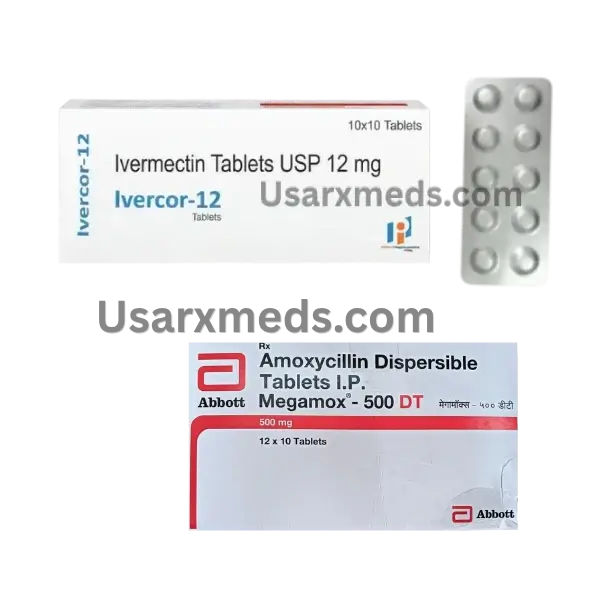
Ivermectin and Mebendazole Tablets Parasite Treatment
$45.00–$220.00Price range: $45.00 through $220.00
Ivermectin and Mebendazole Tablets are a parasite treatment option that combines two well known antiparasitic drugs in one approach. Ivermectin tablets are commonly prescribed for specific parasites and, in selected cases, scabies. Mebendazole tablets are typically used for common intestinal worms like pinworm, roundworm, whipworm, and hookworm. Because different parasites respond to different medicines, this combination should only be used when a clinician has confirmed or strongly suspects the right type of infection.
Active Ingredient
Ivermectin
Indication
Scabies, Filariasis
Packaging
10 tablets in 1 strip
Strength
12mg/500mg
Delivery Time
6 To 15 days
Ivermectin and Mebendazole Tablets Parasite Treatment
Ivermectin and Mebendazole Tablets are the kind of product people usually look for when they are trying to cover “more than one possibility.” That might be because symptoms have been lingering, tests are pending, or a clinician suspects a mixed infection. It is a reasonable question to ask, since parasite treatment is not one size fits all.That said, it helps to know what each medication actually does, because ivermectin tablets and mebendazole tablets work differently and target different parasites.
What ivermectin does
Ivermectin is a prescription antiparasitic medicine used for specific infections. In standard medical use, it is best known for conditions like strongyloidiasis and onchocerciasis. It is also sometimes used as an oral option for scabies in certain situations, usually when topical treatment is not enough, when there is widespread disease, or when there are repeated outbreaks in close contacts.In simple terms, ivermectin affects the parasite’s nervous system. That can lead to paralysis and death of the parasite so your body can clear it out.
What mebendazole does
Mebendazole is a classic deworming medication used for several common intestinal worms. People often recognize it for pinworm treatment, but it is also used for roundworm, whipworm, and hookworm depending on the case and local clinical guidance.Mebendazole works by interfering with the worm’s ability to absorb glucose and function normally. Over time, the worm can no longer survive.
Why some clinicians consider a combination approach
When people search “antiparasitic drugs,” they sometimes assume one pill handles everything. Realistically, different parasites respond to different medications, and diagnosis matters. A combination product like Ivermectin and Mebendazole Tablets may be considered when:
there is concern for mixed parasite exposure
symptoms and history suggest more than one type of worm or parasite
a clinician is trying to match treatment to the most likely organisms while awaiting confirmation
It is important not to self-prescribe a combination product just to “cover all bases.” Parasite symptoms overlap with a lot of other conditions, including allergies, eczema, food intolerance, IBS, or even stress. Treating the wrong thing can delay proper care.
How to take it safely
These are prescription medications. The safest advice is also the simplest: take them exactly as prescribed.Many antiparasitic regimens depend on:
your body weight
the specific parasite
whether reinfection risk is high
whether a repeat dose is needed
If your prescriber tells you to repeat a dose after a certain number of days, follow that schedule. If you are unsure, ask. Do not “add an extra dose” because you still feel itchy or uncomfortable.Also, if the infection being treated is contagious (pinworm and scabies are good examples), treatment sometimes includes steps beyond medication:
washing bedding, towels, and clothing
cleaning high-touch surfaces
treating close contacts when advised
Side effects to watch for
Most people tolerate these medications reasonably well, but side effects can happen.With ivermectin, some people report:
nausea
dizziness
headache
stomach upset
tiredness
With mebendazole, some people report:
stomach pain
nausea
diarrhea
headache
If you experience facial swelling, trouble breathing, severe rash, fainting, chest pain, or sudden vision changes, seek medical help right away.
Precautions that are worth mentioning
Talk to a clinician before using these medicines if you have:
liver disease (particularly important with many antiparasitic medicines)
a weakened immune system
neurologic conditions
pregnancy or breastfeeding concerns
a long list of medications (to check for interactions)
Parasite treatment is usually very manageable when the diagnosis is correct. Getting the right match between parasite and medication is where most of the “success” comes from.
Combination products can vary in exact ingredient amounts, so always confirm the label and follow the prescription directions.
Frequently Asked Questions
1) What are Ivermectin and Mebendazole Tablets used for?
Ivermectin and Mebendazole Tablets are used as a parasite treatment approach when a clinician believes the infection may involve worms or multiple parasites that respond to these antiparasitic drugs.
2) What is the difference between ivermectin vs mebendazole?
They target different parasites and work in different ways. Mebendazole is commonly used for intestinal worms like pinworm and whipworm. Ivermectin is used for specific parasites and is sometimes prescribed for scabies in certain cases.
3) Can I take ivermectin tablets and mebendazole tablets without testing?
It is not recommended. Many symptoms overlap with non-parasitic conditions. Testing and a clinician’s evaluation help ensure you are treating the right problem with the right medicine.
4) How quickly do these medicines work?
They start working in the body fairly soon, but symptom relief can take longer depending on the parasite and how your body reacts. For some conditions, itching or irritation can linger even after the parasite is gone.
5) What should I do if symptoms come back after treatment?
Do not automatically repeat the medication on your own. Recurrence can mean reinfection, incomplete environmental control, or a different diagnosis. Follow up with a clinician for next steps.
Reviews
There are no reviews yet.