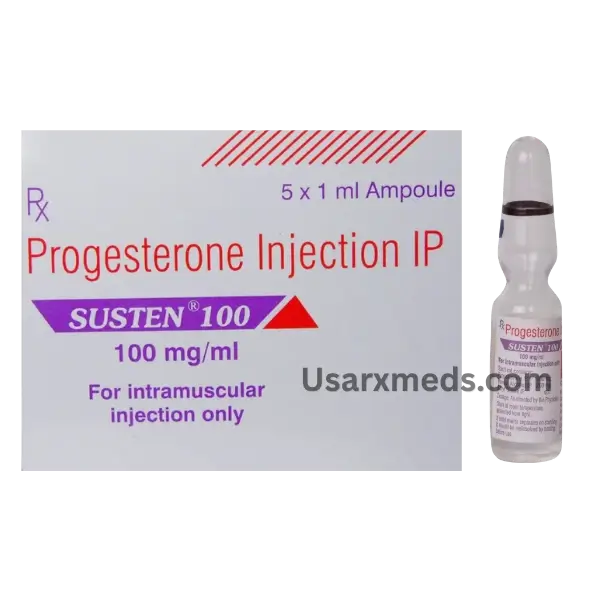
Susten 100 mg Injection is a prescription progesterone injection used for hormone support when the body needs extra progesterone, especially in female infertility treatment plans. It may be prescribed for luteal phase support, early pregnancy support in selected protocols, or other clinician-directed hormone replacement medication plans. Because injection technique, timing, and monitoring matter, Susten 100 mg should only be used under medical supervision.
Susten 100 mg Injection is a progesterone injection that’s typically prescribed when a clinician wants reliable progesterone support. If you’re in a fertility plan, you’ve probably already heard progesterone described as the “support hormone.” That’s not a marketing phrase. It’s pretty accurate. Progesterone helps prepare and maintain the uterine lining after ovulation, and in many fertility protocols, the body’s natural progesterone pattern isn’t strong enough or predictable enough. That’s when progesterone injections like Susten come into the picture.This medication can also show up in hormone support plans that are not strictly fertility-related, depending on the diagnosis. Either way, it’s a prescription hormone. It should be used with a clear plan, not guesswork.
What Susten 100 mg Injection is used for
Your clinician may prescribe Susten 100 mg Injection for:
Female infertility protocols, including luteal phase support in monitored cycles (IUI, IVF, or other ovulation induction plans)
Progesterone deficiency when lab work and symptoms support that diagnosis
Early pregnancy support in select medical protocols
Certain hormone replacement medication plans where injectable progesterone is needed (less common, but possible depending on treatment goals)
The most common use people encounter is fertility support, especially when your clinic wants progesterone levels to be steady and dependable.
How progesterone injections work
Progesterone helps the uterine lining stay stable. After ovulation, progesterone rises naturally. If pregnancy does not occur, progesterone falls and bleeding begins. If pregnancy does occur, progesterone remains higher to support the uterine lining.In fertility treatment, your body may not produce progesterone in the exact pattern your protocol needs, especially after certain medications or procedures. Injected progesterone is a direct way to support the luteal phase and help create a stable environment for implantation and early development, depending on the protocol.
How it is given
Progesterone injections are typically given intramuscularly. That means the injection goes into a muscle, often the upper outer glute area. Your clinic or healthcare provider should teach you:
how to draw up the dose
where to inject safely
how to rotate sites
what to watch for at the injection site
If you are injecting at home, do not be shy about asking for a demonstration. Getting the technique right can reduce pain and reduce the chance of lumps and irritation.Practical tips that help:
Rotate injection sites to prevent soreness buildup.
If the solution is oil-based and feels thick, warming it slightly in your hands can make it easier to inject.
Inject slowly to reduce discomfort.
Side effects you might notice
Progesterone can cause side effects that feel like PMS, because it is essentially recreating a luteal phase hormone environment. Common side effects include:
Call your clinician if you have fever, spreading redness, warmth, severe pain, or drainage at the injection site. Those can be signs of infection.Also seek urgent care if you experience symptoms that could suggest a blood clot or severe reaction, such as chest pain, shortness of breath, or one-sided leg swelling.
Why timing matters in fertility treatment
If you are using Susten 100 mg Injection for fertility, the timing is usually strict. Clinics often time progesterone based on:
ovulation day
trigger shot timing
egg retrieval timing
embryo transfer schedule
The reason is simple. Implantation depends on the lining being in the right state at the right time. Progesterone is a key part of that.
Store Susten 100 mg Injection exactly as the label instructs, usually away from heat and direct light. Do not use it if the solution looks cloudy or has particles.
Available Strengths (As Available in the Market)
Progesterone injections and progesterone support products commonly come in different strengths, including:
Progesterone is also available in oral capsules (100 mg, 200 mg) and vaginal gels or suppositories. Your clinician chooses the form based on your protocol and response.
FAQs
1) What is Susten 100 mg Injection used for?
It is used for progesterone support, commonly in female infertility protocols for luteal phase support, and sometimes in other hormone support plans based on clinician guidance.
2) Is a progesterone injection stronger than progesterone capsules or gel?
Not always “stronger,” but injections can be more consistent in absorption for some patients. Your clinic chooses the form that fits your protocol and hormone targets.
3) What are common side effects of progesterone injections?
Breast tenderness, bloating, fatigue, mood changes, and injection site soreness are common. Severe pain or signs of infection should be reported.
4) How long will I need progesterone injections in fertility treatment?
It depends on the protocol. Some clinics use it until a pregnancy test, and if positive, for several more weeks. Follow your clinic’s instructions.
5) Can I inject Susten 100 mg at home?
Some patients do, after proper training. Do not attempt self-injection without being shown correct technique and dosing instructions by a healthcare provider.
size
10 Ampoule/s, 15 Ampoule/s, 5 Ampoule/s
⭐ Reviews
Reviews
There are no reviews yet.
Be the first to review “Susten 100 mg Injection” Cancel reply
Reviews
There are no reviews yet.