
Getting a viral infection can feel confusing fast. One minute you are fine, the next you are dealing with a fever, body aches, or a painful sore that came out of nowhere. People often ask for “something to kill the virus,” but viruses do not work like bacteria. That is where antiviral medications come in.
Antivirals are not needed for every cold, and they are not a magic fix. In many cases, though, they can shorten symptoms, reduce complications, and help prevent outbreaks from coming back as often. This matters a lot for infections like herpes and flu, where timing and the right treatment choice make a real difference.
Below is a clear, practical guide to antiviral medications, including antiviral medications for herpes, antiviral for flu options, and the big question people keep searching: what is the strongest natural antiviral for herpes?
What Are Antiviral Medications?
Antiviral medications are drugs that help treat viral infections by stopping the virus from multiplying in your body. They do not “wipe out” every virus cell instantly. Instead, they slow the virus down so your immune system can catch up and do its job.
Antivirals vs antibiotics (simple difference)
A lot of people mix these up, so here is the clean version:
- Antibiotics treat bacterial infections (like strep throat or some UTIs).
- Antivirals treat viral infections (like flu, herpes, HIV, hepatitis).
Taking antibiotics for a virus usually does not help, and it can lead to side effects and antibiotic resistance. That is why doctors try to match the right medicine to the right type of germ.
How antivirals work in the body
Viruses have one main goal: make copies of themselves. Antivirals work by blocking steps in that copying process, such as:
- stopping the virus from entering cells
- blocking viral DNA or RNA replication
- preventing the virus from releasing new viral particles
Different antiviral drugs target different steps. That is why one antiviral might work well for herpes, but not do much for the flu.
Types of Antiviral Medications
There is no single “antiviral drugs list” that fits every virus. Antivirals are usually grouped by the infections they treat.
Here are the most common categories people run into:
- Herpes antivirals (HSV-1, HSV-2, shingles, chickenpox)
- Flu antivirals (influenza A and B)
- HIV antivirals (antiretroviral therapy, a separate area)
- Hepatitis antivirals (hepatitis B and C, also separate protocols)
- COVID-19 antivirals (used in specific situations, depending on risk)
For this article, we are focusing on the two most searched topics: herpes and flu.
Antiviral Medications for Herpes
Herpes is common, and it often comes with a lot of stress and stigma. The medical side is more straightforward than the emotional side.
Herpes viruses (HSV-1 and HSV-2) stay in the body long-term. That means treatment is usually about control, not “erasing” the virus.
Antiviral medications for herpes can help by:
- reducing the length of an outbreak
- making symptoms milder
- lowering how often outbreaks happen (with suppressive treatment)
- reducing viral shedding, which may lower transmission risk (but does not remove it)
Common herpes treatment medications include:
- acyclovir for herpes
- valacyclovir (often used because it is convenient)
- famciclovir (another option, depending on the person)
You might notice doctors talk about two approaches:
- Episodic therapy: You take medicine at the first sign of symptoms.
- Suppressive therapy: You take medicine regularly to prevent outbreaks.
Which one fits best depends on how often outbreaks happen, how severe they are, and your personal situation.
Antiviral for Flu
The flu is not “just a bad cold.” It can be serious, especially for older adults, young children, pregnant people, and anyone with chronic health issues.
A proper flu antiviral treatment can:
- shorten symptom duration (often by about a day, sometimes more)
- reduce the risk of complications
- help people at higher risk recover more safely
Flu antivirals work best when started early. Many guidelines recommend starting within about 48 hours of symptoms, though doctors may still use them later for severe cases or high-risk patients.
Common antiviral options for flu include:
- oseltamivir (often known by the brand Tamiflu)
- zanamivir (inhaled form)
- peramivir (IV option, used in certain settings)
- baloxavir (works differently than oseltamivir and may be a single-dose option in some cases)
Not everyone needs an antiviral for the flu. Some people do fine with rest, fluids, and fever control. The decision depends on your symptoms, your risk factors, and how quickly you can start treatment.
Best Antiviral Medications for Herpes
People often search for “the best” herpes medication, but the honest answer is: the best one is the one that fits your body, your outbreak pattern, and your lifestyle.
Still, there are a few main prescriptions that show up again and again in herpes care.
Acyclovir for herpes
Acyclovir is one of the oldest and most studied herpes antivirals. It is commonly used for:
- genital herpes (HSV-2 and HSV-1)
- oral herpes (cold sores)
- shingles (herpes zoster), in some situations
Why it’s used so often:
- strong track record
- widely available
- effective when taken correctly and early
Things to know:
- it may require more frequent dosing than some newer options
- kidney function matters, especially for higher doses or long treatment courses
Valacyclovir uses
Valacyclovir is basically a “prodrug” of acyclovir. Your body converts it into acyclovir after you take it.
Valacyclovir uses commonly include:
- treatment of genital herpes outbreaks
- suppressive therapy to reduce outbreak frequency
- cold sore treatment
- shingles treatment in appropriate cases
Why many people prefer it:
- it is often taken less frequently than acyclovir
- easier routine can improve consistency
Famciclovir (general mention)
Famciclovir is another herpes antiviral. You might see it used for genital herpes, cold sores, or shingles.
You may also see people search for famciclovir dosage online. It is understandable, but dosing depends on the infection type, your kidney function, and whether it is episodic or suppressive therapy. This is one area where it is safest to follow a clinician’s instructions instead of guessing.
Effectiveness and safety considerations
In general, these medications work best when:
- you start them early (at tingling, itching, or first lesion)
- you take them consistently as prescribed
- you avoid triggers that tend to cause flare-ups (more on that later)
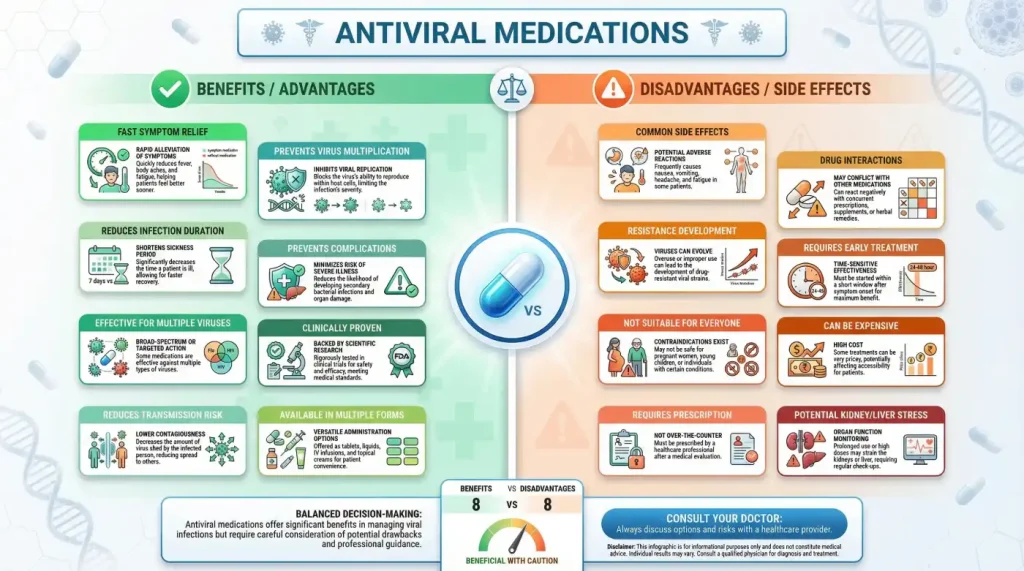
Possible side effects can include headache, nausea, and stomach upset. Some people also feel tired or dizzy. Serious side effects are less common but can happen, especially with kidney problems or drug interactions.
Antiviral Medications for Flu: What Works Best?
If you are searching for an antiviral for flu, you are probably feeling miserable and want relief quickly. Flu antivirals are not like pain relievers. They do not just mask symptoms. They work by slowing viral replication.
The most common flu antiviral options
Here is a simple overview:
- Oseltamivir: oral capsule or liquid; commonly prescribed
- Zanamivir: inhaled; not ideal for people with asthma or COPD
- Peramivir: IV; used in more severe or hospital-based cases
- Baloxavir: oral; works differently than oseltamivir and may be used in certain people
Who benefits most from flu antivirals?
Flu antivirals are often most helpful for:
- people with severe symptoms
- people at high risk of complications
- those who can start treatment early
Also, antivirals are not a substitute for the flu shot. Vaccination helps reduce your risk of getting flu in the first place, and it can reduce severity if you do catch it.
What Is the Strongest Natural Antiviral for Herpes?
This is one of the most common searches out there: what is the strongest natural antiviral for herpes?
It is also where misinformation spreads fast, so let’s keep this grounded.
Right now, there is no natural remedy proven to work like prescription antivirals for herpes. Some natural options may support your immune response or reduce triggers that lead to outbreaks. But they are not a guaranteed replacement for medical treatment.
Natural antiviral remedies people often talk about (with realistic expectations)
Here are a few that come up often:
Lysine (amino acid)
Some people use lysine as a supplement to help reduce outbreaks. Research is mixed. A few studies suggest it may help some individuals, especially if they have low dietary intake, while other studies show limited benefit.
If you try it, it is worth discussing with a healthcare professional, especially if you have kidney problems or take other supplements.
Lemon balm (topical)
Lemon balm cream is sometimes used for cold sores. A few small studies suggest it may reduce symptom severity. Evidence is not perfect, but it is one of the more reasonable “natural” options for mild cold sores.
Zinc (topical or dietary)
Zinc supports immune function. Some topical zinc products have been studied for cold sores, with mixed results. As a general immune-support nutrient, zinc is important, but more is not always better.
General immune system support (the boring but effective stuff)
This is not flashy, but it matters:
- consistent sleep
- balanced meals
- stress management
- exercise you can maintain
- limiting alcohol and quitting smoking if possible
Stress and poor sleep are common outbreak triggers. Many people notice flare-ups during tough weeks. Supporting your immune system does not “cure” herpes, but it may reduce the frequency and intensity of outbreaks for some.
Natural vs Prescription Antiviral Medications
If you are deciding between natural support and prescriptions, here is a clear way to think about it.
Prescription antiviral medications
Pros:
- strong evidence
- predictable dosing and effects
- helpful for frequent outbreaks and severe flu cases
Cons:
- require prescription in most cases
- possible side effects and drug interactions
- not necessary for every mild viral illness
Natural antiviral remedies and lifestyle support
Pros:
- can improve overall health
- may reduce triggers and support immune balance
- often low cost
Cons:
- limited evidence for direct antiviral effect in herpes
- quality varies widely between supplements
- may give false confidence if used instead of needed treatment
A practical approach many people use is: prescription medication for active management, plus lifestyle steps to lower triggers long-term.
Side Effects and Safety of Antiviral Medications
Most antivirals are well tolerated, but side effects do happen. It helps to know what is common so you are not blindsided.
Common side effects (many antivirals)
- headache
- nausea
- diarrhea or stomach discomfort
- dizziness
- fatigue
Who should be cautious
You should be extra careful and ask a clinician for guidance if you:
- have kidney disease or reduced kidney function
- are pregnant or breastfeeding
- have a weakened immune system
- take multiple medications (higher chance of drug interactions)
For example, some antivirals need dose adjustments for kidney function. Also, flu antivirals have special considerations for people with respiratory conditions (like inhaled zanamivir).
If you ever develop severe rash, facial swelling, trouble breathing, confusion, or intense weakness after starting a medication, treat it as urgent and seek medical care.
How to Use Antiviral Medications Safely
Most problems with antivirals come from timing, inconsistency, or mixing them with other meds without telling a doctor.
Here are safe, general tips:
- Start early when possible. Flu antivirals and episodic herpes treatment work better when started soon after symptoms begin.
- Take them exactly as prescribed. Skipping doses can reduce effectiveness.
- Tell your provider about all medications and supplements. This includes over-the-counter drugs and “natural” products.
- Stay hydrated. Some antivirals are processed through the kidneys, and hydration can be helpful. If you have kidney or heart issues, ask your clinician what “enough fluids” means for you.
- Do not share prescriptions. A friend’s medication might be wrong for your condition or unsafe with your health history.
This guide avoids exact dosing on purpose. Dose depends on your infection, your age, your kidney function, and whether treatment is episodic or suppressive. A clinician can tailor it safely.
When to See a Doctor
Sometimes you can manage viral symptoms at home. Other times, you should not wait it out.
Consider seeing a doctor if:
- you think you have the flu and you are high risk (older adult, pregnant, chronic illness, immune suppression)
- flu symptoms are severe (trouble breathing, chest pain, dehydration, confusion)
- you have frequent or painful herpes outbreaks
- sores are near the eyes, or you have eye pain or vision changes
- you are not sure what the rash or sores are
- symptoms keep returning and you want a long-term plan
Getting a correct diagnosis matters. Cold sores, canker sores, allergic rashes, and other skin conditions can look similar. Testing can remove a lot of uncertainty.
FAQs
What are antiviral medications used for?
Antiviral medications are used for viral infections where slowing the virus helps your body recover. Common examples include flu, herpes, shingles, HIV, and hepatitis. They work best for certain viruses, not all. Many everyday colds do not have a specific antiviral treatment, so care focuses on rest, fluids, and symptom relief.
What is the best antiviral for herpes?
For many people, acyclovir, valacyclovir, or famciclovir are the main options. The “best” one depends on how often outbreaks happen, how severe they are, and what fits your routine. Valacyclovir is often chosen for convenience, while acyclovir is widely used and well studied. Your clinician can help match the option to your needs.
What antiviral is used for flu?
Oseltamivir is one of the most commonly used flu antivirals. Other options include zanamivir, peramivir, and baloxavir. These medicines work best when started early, often within the first two days of symptoms. People at higher risk of complications tend to benefit the most from flu antiviral treatment.
What is the strongest natural antiviral for herpes?
There is no single natural product proven to work like prescription antivirals for herpes. Some people use immune-support steps like sleep, stress reduction, and nutrition, plus options like lysine or lemon balm. These may help some individuals with symptom comfort or triggers, but they do not replace medical herpes treatment medications when outbreaks are frequent or severe.
Do antiviral medications cure herpes?
No. Antiviral prescription medications for herpes do not cure the virus. Herpes stays in the body and can reactivate. Antivirals help control outbreaks by reducing viral activity. Many people see fewer outbreaks and milder symptoms with treatment. Some also use suppressive therapy to lower outbreak frequency and reduce transmission risk, though it does not eliminate it.
How quickly do antivirals work?
Timing depends on the infection and when you start. For flu, antivirals tend to work best when started early and may shorten illness and reduce severity. For herpes, starting medication at the first sign of tingling or itching can make an outbreak shorter and milder. If you start late, you may still get some benefit, but it is often less.
Can I take antivirals every day?
Some people do, especially for herpes suppressive therapy. Daily use can reduce outbreaks and improve quality of life for those with frequent symptoms. This should be decided with a healthcare professional because long-term plans depend on your health history, kidney function, and how often outbreaks occur.
Are antiviral medications the same as antibiotics?
No. Antibiotics treat bacterial infections. Antivirals treat viral infections by slowing viral replication. Using antibiotics for viruses usually does not help and can cause side effects and resistance. If you are unsure whether an illness is viral or bacterial, a clinician can help you figure it out based on symptoms and testing.
A quick safety note
Always consult a healthcare professional before starting any medication. This includes prescription antivirals and supplements, since interactions and side effects are possible.